
Corporate Team Building Leadership Activities
In Rome, Georgia
Rome, Georgia has a character that encourages people to slow down and pay attention to what is around them. The historic Rome Clocktower overlooks downtown, three rivers meet within the city, and Berry College adds a distinctive landscape of historic architecture and open spaces. Those surroundings make a fitting backdrop for leadership development centered on awareness, patience, and purposeful action.
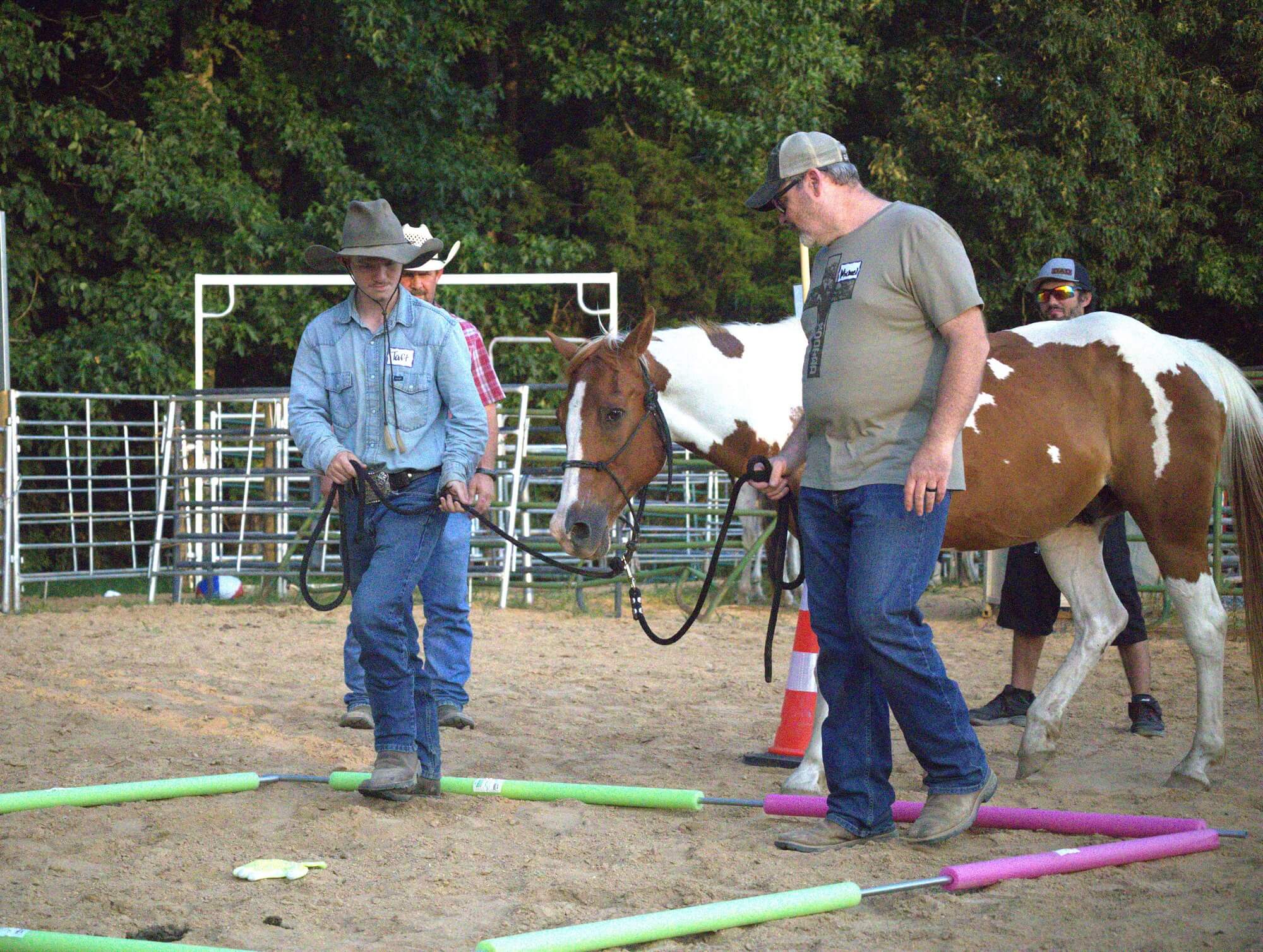
At Suhls Rodeo, our corporate team building leadership activities give managers and emerging leaders a chance to examine how they influence others when job titles and familiar routines are taken out of the equation. Through guided, ground-based interaction with horses, participants can see how confidence, consistency, communication, and self-awareness affect the response they receive.
Develop Leadership That Does Not Depend on Volume
Some of the strongest leaders are not the loudest people in the room. Our corporate team building leadership activities in Georgia give participants an opportunity to explore how calm presence and clear direction can influence a group without relying on pressure.
Leaders may work on skills such as:
- Communicating with calm confidence
- Listening before giving additional direction
- Building trust through consistent behavior
- Recognizing when another perspective deserves attention
- Setting expectations without overcontrolling the process
- Becoming more aware of non-verbal communication
- Making thoughtful adjustments when progress slows
- Helping other people contribute with confidence
For leaders who work closely with the same employees over time, those behaviors can shape the tone of everyday relationships as much as any major decision.
Discover How Quiet Confidence Creates Influence
Leadership confidence does not have to look forceful.
Horses respond to consistency, attention, body language, timing, and emotional state. Increasing volume or applying more pressure does not automatically create a stronger response.
That can be eye-opening for participants who associate leadership with always stepping forward first.
A manager may discover that a calmer approach creates greater trust. Another participant might realize that hesitation is making their direction difficult to understand. Someone else may see that they can influence the situation without dominating it.
Our facilitators help leaders reflect on what happened and consider how the same patterns may appear when they communicate with employees.
The lesson is not that leaders should become quieter. It is that confidence works best when it is grounded in awareness, clarity, and consistency.
Strengthen Self-Awareness Before Leading Others
Leaders regularly evaluate employee performance, communication, and behavior. It can be harder to recognize their own habits with the same clarity.
Horse-assisted learning gives participants feedback that is immediate and difficult to explain away.
A leader might believe they are approaching a challenge patiently while their body language shows tension. Another may think they have communicated a clear goal when the group is receiving mixed signals.
The horse responds to what is happening rather than what the leader intended.
That difference creates an opportunity for self-awareness.
Participants can notice the response, consider what they are communicating, and make an adjustment. Our facilitators then help connect that experience to workplace leadership, where understanding one’s own habits can make communication and decision-making more deliberate.
Lead Close-Knit Teams Without Taking Over
In smaller or closely connected organizations, leaders often know their employees well. That familiarity can be a strength, but it can also make certain leadership habits harder to notice.
Managers may step into problems too quickly because they know how to solve them. Long-standing team members may defer automatically to the same person. Employees may become hesitant to offer another idea when established patterns are deeply familiar.
Horse-assisted exercises create a different dynamic.
The designated leader may not be the person who notices the most useful information. Someone else may identify what the group needs to change.
The leader then has to decide how to respond.
Can they listen without immediately taking control? Can they allow another participant to contribute while still maintaining responsibility for the outcome?
Those moments help leaders explore the difference between providing direction and preventing other people from developing confidence of their own.
Build Trust Through Consistency and Follow-Through
Trust develops when employees know what to expect from their leaders.
In an equine exercise, inconsistent signals can make progress difficult. Participants may communicate one direction and then behave in a way that suggests something different.
The team can see the effect immediately.
That gives leaders an opportunity to consider how consistency works in their own organizations. Do expectations remain clear? Do actions support the message being communicated? Does the leader follow through after making a commitment?
Our activities can help participants recognize that trust is not created through one motivational conversation.
It grows through repeated experiences where people see that leadership is dependable, respectful, and clear.
Make Better Decisions by Paying Attention First
Leadership sometimes creates pressure to act quickly.
Good judgment also requires knowing when to observe before making the next move.
During a horse-assisted challenge, participants may begin with one plan and discover that the situation calls for something different. A leader can continue pushing forward or pause long enough to understand what has changed.
That pause can reveal information the group initially missed.
Another participant may have an important observation. The horse may be responding to something the leader did not recognize. The original objective may still be right even though the approach needs to change.
We help leaders use those moments to explore judgment, adaptability, and the value of gathering useful information before deciding what comes next.
Plan Leadership Activities in Rome, Georgia
If your organization wants leaders who can communicate confidently without overpowering others, build trust through consistency, listen carefully, and make thoughtful decisions, we can help you plan an experience around those priorities.
Tell us your preferred date, approximate participant count, leadership levels represented, and what you want your team to strengthen.
Call 407-908-0568 or email info@suhlsrodeo.com to start planning your Rome, Georgia leadership experience.
FAQs About Corporate Team Building Leadership Activities
In Rome, Georgia
What leadership skills can Rome, Georgia organizations develop?
Rome, Georgia organizations can use the experience to explore leadership presence, self-awareness, trust, communication, listening, decision-making, delegation, confidence, accountability, and thoughtful influence.
Is this useful for leaders of smaller or close-knit teams?
Yes. Leaders in Rome, Georgia who work closely with the same employees can examine how familiarity affects communication, delegation, boundaries, and the opportunities they give other people to contribute.
Can quieter leaders benefit from the program?
Yes. Rome, Georgia participants can see that effective leadership does not depend on being the loudest person in a group. Calm confidence, observation, consistency, and clear direction can all create influence.
Can emerging managers participate?
Yes. Rome, Georgia organizations can include supervisors, future managers, project leads, and other employees preparing for greater responsibility alongside experienced leaders.
Do participants need previous horse experience?
No. Participants in a Rome, Georgia leadership session do not need riding or horse-handling experience. All horse-assisted activities are guided and completed from the ground.
How do horses help improve leadership self-awareness?
Horses respond to body language, timing, emotional state, consistency, and attention. That immediate feedback can help Rome, Georgia leaders recognize differences between what they intend to communicate and what their behavior may actually convey.
Can the experience help with delegation and trust?
Yes. Exercises can place leaders in situations where they need to communicate the goal, allow other people to contribute, and decide when intervention is helpful or when stepping back supports greater confidence within the team.
Does Suhls Rodeo have a permanent facility in Rome, Georgia?
This page represents our availability to serve Rome, Georgia organizations rather than a permanent staffed Suhls Rodeo location in the city. We will provide the confirmed venue and arrival details during planning.