
Corporate Team Building Leadership Activities
In Atlanta, Georgia
Atlanta, Georgia is home to organizations where leaders often manage growth, different departments, shifting priorities, and people with a wide range of expertise. From Centennial Olympic Park and the Georgia Aquarium to Mercedes-Benz Stadium and Atlanta’s active downtown business district, the city reflects the scale, movement, and energy that can make strong leadership especially important.
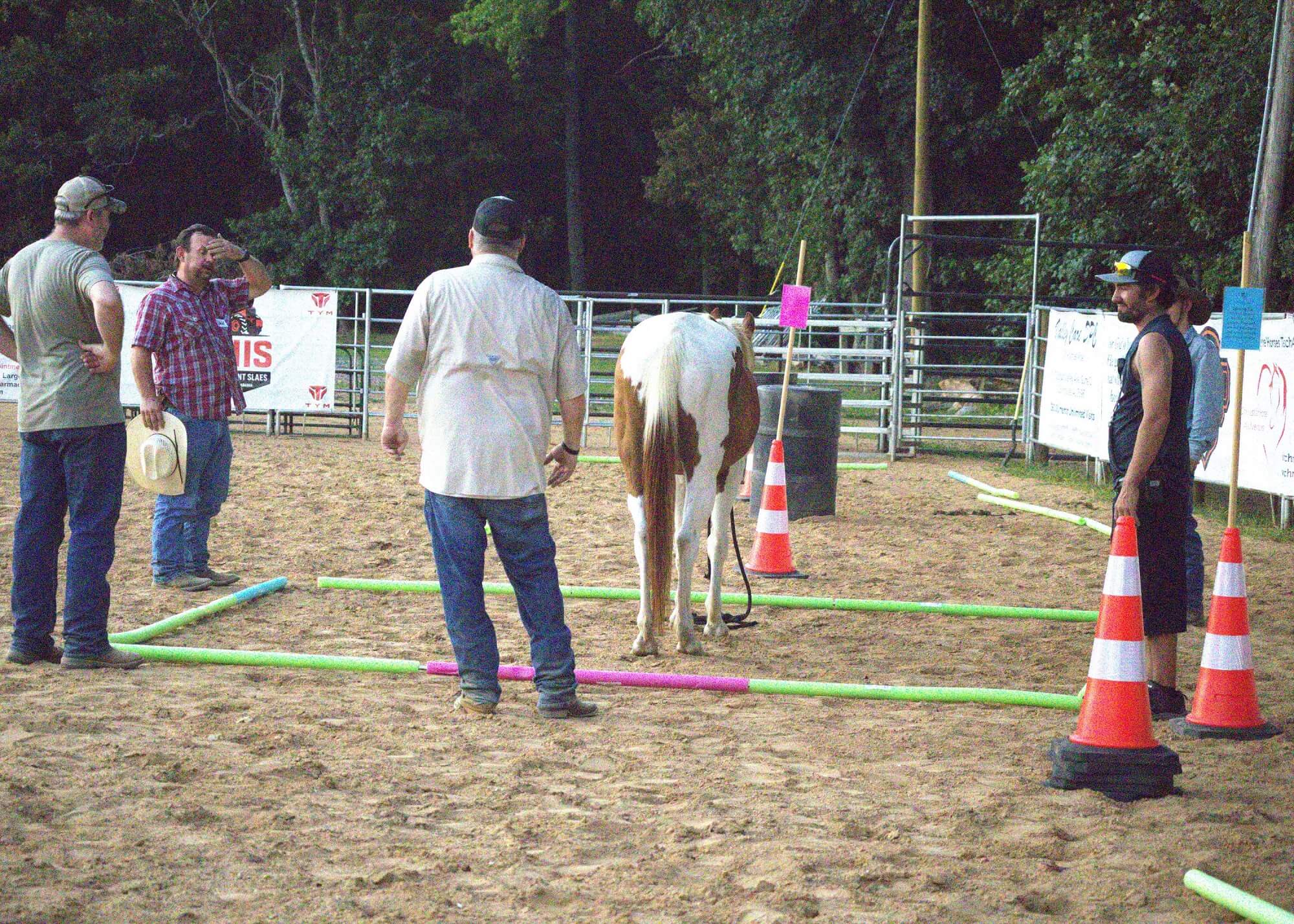
At Suhls Rodeo, our corporate team building leadership activities move leadership development outside the conference room. Managers and emerging leaders work beside horses through facilitated, ground-based exercises where communication, trust, judgment, self-awareness, and influence become easier to observe. No horseback riding is involved, and participants do not need previous horse experience.
Lead Complex Teams With Greater Clarity
As organizations grow, leaders may find themselves responsible for people who work in different functions, have different priorities, or approach decisions from very different perspectives. Keeping everyone moving toward a shared goal requires more than issuing instructions.
Our corporate team building leadership activities in Georgia give participants a setting where they can examine how effectively they establish direction and create confidence.
Atlanta, Georgia leaders may work on areas such as:
- Communicating goals with greater clarity
- Building trust across different roles
- Delegating without losing accountability
- Staying composed when pressure increases
- Listening to expertise before deciding
- Recognizing how non-verbal behavior affects others
- Adjusting direction when circumstances change
- Creating confidence without overcontrolling the team
The exercises give leaders an opportunity to see how these behaviors affect progress as the experience unfolds.
Strengthen Leadership Presence Without Relying on Seniority
An executive title may establish responsibility, but horses do not know who holds the highest position in an organization.
They respond to what participants communicate through body language, attention, consistency, confidence, and emotional state.
That creates a different kind of leadership feedback.
A senior executive may discover that moving too quickly creates uncertainty. A department leader may recognize that their instructions sound confident while their body language communicates tension. An emerging manager may learn that a calm, deliberate approach creates more influence than trying to appear forceful.
Our facilitators help participants examine those responses and consider how leadership presence affects employees.
The goal is greater self-awareness. Leaders have an opportunity to see how they are experienced by others rather than relying only on how they intend to come across.
Practice Judgment When Several Perspectives Compete
Leaders in larger organizations rarely make decisions in isolation. Finance, operations, sales, technology, human resources, and other functions may each see the same challenge differently.
Strong judgment requires listening to those perspectives without allowing the decision-making process to lose direction.
Horse-assisted exercises can recreate that challenge in a simple, observable way.
Several participants may have different ideas about what the group should do next. The designated leader has to listen, assess what is happening, and decide how to move forward.
They may discover that another person has noticed something important. They may also need to decide when enough information has been gathered and a clear choice needs to be made.
Those moments create useful conversations about leadership judgment, shared responsibility, and the difference between gathering input and avoiding a decision.
Delegate Without Disappearing From the Outcome
Delegation can become difficult for leaders who are accustomed to solving problems themselves.
Some managers hand off a task but continue directing every detail. Others step away so completely that employees are uncertain about expectations or accountability.
Horse-assisted challenges can help participants explore the space between those extremes.
A leader may need to communicate the objective, establish responsibilities, and allow someone else to act. They then have to remain attentive without immediately taking control when the process looks different from what they expected.
That creates opportunities to consider important workplace questions.
Does the employee understand what success looks like? Has the leader given enough authority to act? Is support available when needed? Who remains accountable for the final outcome?
We help participants use the experience to think about delegation as a leadership skill built on clarity and trust.
Maintain Trust When Direction Needs to Change
Changing course can be necessary, but employees need to understand why the change is happening.
A leader who shifts direction suddenly without communicating the reason can create uncertainty. Employees may wonder which priorities still matter or how long the newest decision will remain in place.
Working with horses provides opportunities to practice changing an approach while maintaining a clear objective.
Participants may begin an exercise one way and receive feedback that suggests another approach would be more effective. The leader then has to help the group adjust without creating unnecessary confusion.
That experience can help leaders consider how they communicate change at work.
Strong leadership does not require sticking with every original decision. It requires helping people understand what changed, what remains important, and what the team needs to do next.
Recognize When Influence Matters More Than Control
Leaders cannot personally manage every action in a growing organization.
They need people to understand the direction, trust the leadership, and make sound decisions when the manager is not standing beside them.
That requires influence.
Horse-assisted learning can help leaders see how consistency, respect, calm direction, and clear expectations create cooperation without constant control.
Participants may discover that applying more pressure does not improve the response. Another approach may work better when the leader becomes more patient, listens carefully, or communicates the goal more clearly.
These experiences help leaders consider what causes employees to follow direction because they understand and trust it rather than because someone with authority is watching.
Plan Leadership Activities in Atlanta, Georgia
If your organization wants leaders who can guide complex teams, listen to different perspectives, make sound decisions, delegate with confidence, and maintain trust through change, we can help you plan an experience around those priorities.
Tell us your preferred date, approximate participant count, leadership levels represented, and the areas you want participants to strengthen.
Call 407-908-0568 or email info@suhlsrodeo.com to start planning your Atlanta, Georgia leadership experience.
FAQs About Corporate Team Building Leadership Activities
In Atlanta, Georgia
What leadership skills can Atlanta, Georgia organizations develop?
Atlanta, Georgia organizations can use the experience to explore leadership presence, communication, judgment, trust, delegation, accountability, emotional control, decision-making, and influence across different teams.
Is this suitable for executive leadership teams in Atlanta, Georgia?
Yes. Atlanta, Georgia executives can examine how they communicate direction, build trust, respond to pressure, consider different perspectives, and influence people without relying solely on organizational authority.
Can managers from different departments participate together?
Yes. Bringing leaders from different functions together can give Atlanta, Georgia organizations an opportunity to explore communication, shared decision-making, trust, and how competing priorities are handled.
Can emerging leaders take part?
Yes. Atlanta, Georgia companies can include supervisors, project leads, high-potential employees, and other future managers who need opportunities to practice confidence, decision-making, communication, and responsibility.
Do participants need previous horse experience?
No. Atlanta, Georgia leadership participants do not need riding or horse-handling experience. All equine exercises are facilitated and completed from the ground.
Can the experience help leaders improve delegation?
Yes. Activities can require Atlanta, Georgia leaders to communicate an objective, give another participant responsibility, remain attentive to progress, and recognize when support is useful without immediately taking control.
Can the program support leaders during organizational growth or change?
Yes. Atlanta, Georgia organizations can use the experience to explore clear communication, adaptability, employee confidence, decision-making, and maintaining trust when priorities or responsibilities shift.
Does Suhls Rodeo have a permanent facility in Atlanta, Georgia?
This page represents our availability to serve Atlanta, Georgia organizations rather than a permanent staffed Suhls Rodeo location in the city. We will provide the confirmed event venue and arrival details during planning.